

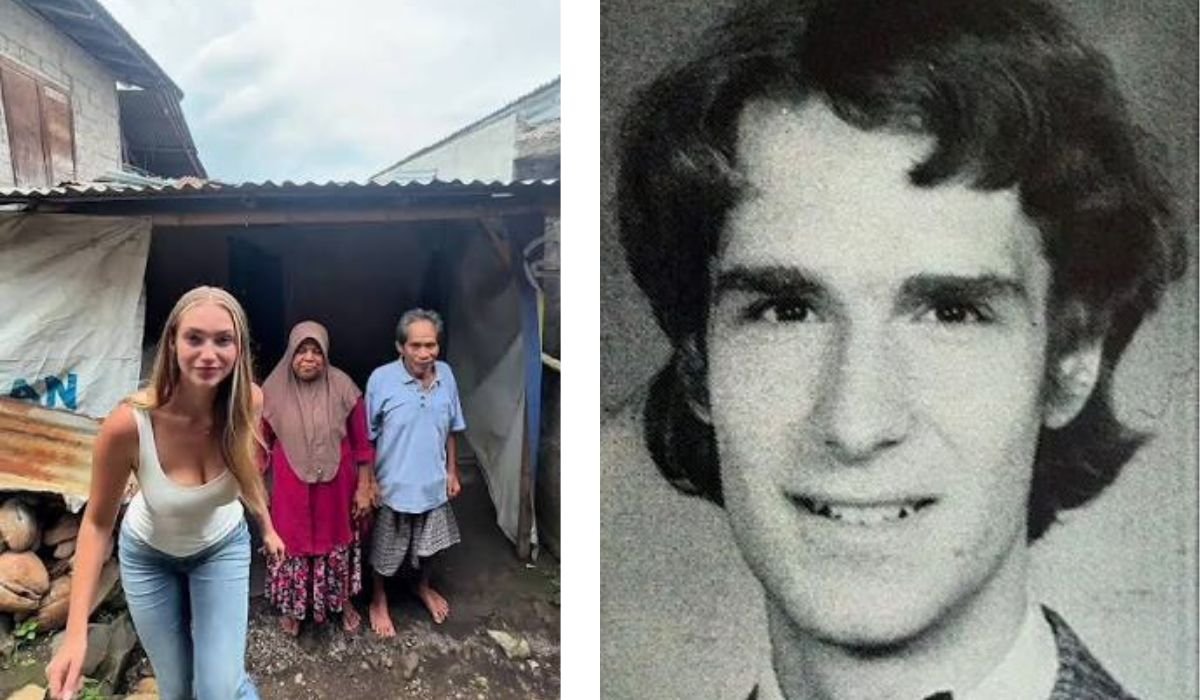
Charity Nye is a name that has attracted considerable curiosity online, largely because numerous biography websites connect her with well-known science educator and television personality Bill Nye. However, the information available about her is limited, and many commonly repeated details are not supported by strong primary sources. This makes her an unusual subject for a biography article. Rather than presenting uncertain claims as facts, it is more responsible to examine what is publicly reported, what remains unclear, and why people continue searching for answers. The story also highlights how quickly repeated internet claims can become accepted as biography.
| Quick Bio | Details |
|---|---|
| Full Name | Charity Nye |
| Known For | Online interest surrounding her reported connection to Bill Nye |
| Reported Family Connection | Often described online as Bill Nye’s daughter |
| Reported Birth Year | 2003, although not independently verified |
| Reported Birthplace | Florida, according to some online sources |
| Public Career | No reliably documented public career |
| Public Social Media | No widely verified official account identified |
| Public Status | Information remains limited and uncertain |
| Main Reason for Online Interest | Questions surrounding identity and family background |
1. Who Is Charity Nye?

Charity Nye is primarily known through online articles that describe her as the alleged daughter of Bill Nye, the American science communicator popularly called “Bill Nye the Science Guy.” Beyond this reported connection, there is very little reliable public information about her personal life, education, career, or current activities. This lack of verifiable information is important because many websites repeat similar claims without providing original documentation. As a result, readers should approach biographies about her carefully. The most accurate description is that she is a name associated online with Bill Nye, while important details about her identity and family relationship remain unconfirmed.
2. Why Has Her Name Become Popular?
The popularity of the name appears to come mainly from curiosity surrounding Bill Nye’s personal life. Bill Nye has spent decades in the public eye, but his professional work has received far more attention than his family life. Whenever internet users search for information about whether he has children, the name Charity frequently appears in search results and online discussions. This has created a cycle in which one website repeats information from another. Over time, repeated claims can appear authoritative even when they originate from an unclear source. That pattern seems to have contributed significantly to the continuing interest surrounding her.
3. The Reported Connection to Bill Nye

Many online biography pages identify Charity as Bill Nye’s daughter. However, the relationship has not been clearly confirmed through a reliable primary source. Major public profiles of Bill Nye generally focus on his career as an engineer, educator, author, television personality, and science advocate. They do not consistently identify a daughter by this name. Some online sources therefore describe her as his “reported” or “alleged” daughter rather than stating the relationship as proven fact. This distinction matters because responsible writing should separate documented information from claims that have been repeated without independent verification.
4. What Is Actually Verified?
One of the biggest challenges in researching this topic is finding information that can be independently confirmed. There are no widely recognized interviews, official profiles, or major news reports providing a detailed biography. Most available pages repeat a small collection of details, including an alleged birth year and family connection. Repetition alone does not make information accurate. In fact, several online sources acknowledge that the available evidence is weak. Therefore, a careful article should treat many commonly published details as reported claims rather than established facts. This approach gives readers a clearer understanding of what is genuinely known.
5. Reported Birth Information
Several websites claim that Charity was born in April 2003 and that she was born in Florida. These details are frequently repeated across biography-style websites. However, no strong public documentation has been identified to independently verify them. Consequently, they should not be presented as confirmed biographical facts. If the reported birth year were accurate, she would be in her early twenties in 2026. Nevertheless, even this age calculation depends entirely on an unverified date. Readers should therefore understand that commonly published information about her age and birthplace remains part of the online narrative rather than confirmed public documentation.
6. Questions About Her Parents
The question of parentage is at the center of the online discussion. Some websites identify Bill Nye as her father and musician and author Blair Tindall as her mother. However, this claim has not been firmly established through reliable public records or direct statements. The uncertainty is one reason the subject continues to generate discussion. It is also a reminder that celebrity-related information can easily become distorted when websites copy one another. Without confirmation from a trustworthy primary source, claims about someone’s parents should remain clearly labeled as allegations or reports rather than facts.
7. The Bill Nye Family Question
Bill Nye is internationally recognized because of his science education work, television appearances, books, and advocacy. His public career is extensively documented, but his private family life is comparatively less visible. This contrast helps explain why searches about his possible children attract attention. People naturally become curious when they discover conflicting information across different websites. Some pages claim he has a daughter, while other public discussions state that he does not have children. The absence of a clear, authoritative answer has allowed speculation to continue for years. For now, the available evidence does not provide a definitive resolution.
8. Blair Tindall and the Online Narrative
Blair Tindall was a respected oboist, journalist, and author known for her work in music and her book Mozart in the Jungle. Some websites connect her name with the story surrounding Charity. However, the relationship between Tindall and the alleged daughter is not sufficiently documented in reliable sources to establish the commonly repeated family narrative. This is another example of why readers should examine the origins of online claims. A person’s known public biography should not automatically be expanded with additional family details simply because those details appear on multiple low-authority websites.
9. Why the Biography Remains Unclear
The biography remains unclear because there is no substantial body of verified information about her public life. A conventional celebrity biography usually contains interviews, career records, public appearances, official social media accounts, or statements from reputable publications. None of these sources provide a comprehensive profile in this case. As a result, many online articles fill the gaps with repeated claims and speculation. This creates a difficult research environment. Instead of a traditional biography, the available material is better understood as an examination of an online identity whose details have never been adequately documented.
10. Is She a Public Figure?
There is little evidence that she is a conventional public figure. Unlike her alleged famous father, she does not have a widely documented career in entertainment, science, politics, business, or another highly visible field. The attention surrounding her appears to come almost entirely from searches related to Bill Nye. This distinction is important because being discussed online does not necessarily make someone a celebrity. A private individual can become the subject of thousands of searches simply because of a family rumor or an inaccurate biography. Her situation appears to fit that unusual pattern of internet-driven attention.
11. Her Reported Private Lifestyle
Many websites describe her as someone who prefers to remain away from the spotlight. However, even this description should be treated cautiously because there is no verified interview in which she explains her personal choices. It is possible that the person behind the name is genuinely private, but it is also possible that online articles have simply used privacy as an explanation for the absence of information. Both possibilities demonstrate why assumptions should not be confused with evidence. The lack of public information tells us very little about a person’s actual lifestyle or personality.
12. Education and Academic Background
There is no reliably documented information about her schooling, university attendance, degrees, or academic achievements. Some websites speculate that a person connected to a famous science educator might have received an academically strong upbringing, but such assumptions are not evidence. A person’s educational history should be based on verified records or direct statements whenever possible. In this case, there is not enough reliable material to describe a particular school, university, or field of study. Any article claiming detailed educational information should therefore be read with considerable caution unless it provides a trustworthy source.
13. Career and Professional Life
Her professional career is another area where reliable information is missing. Online articles do not consistently identify a profession, employer, business, or creative career associated with her. This absence may simply reflect a private lifestyle, but it also means that claims about her occupation cannot be confidently confirmed. It would be inappropriate to invent a career based on her reported family connection. Until a trustworthy source provides evidence, the most accurate statement is that her professional activities are not publicly documented in a reliable way.
14. Social Media Presence
People frequently search for social media accounts belonging to her, especially Instagram and other popular platforms. However, no widely verified account has been established as authentic. This is significant because many individuals share similar names, and incorrectly identifying a private person’s social media account can create serious privacy concerns. Readers should avoid assuming that an account belongs to her simply because the username contains her name. Without verification from the individual or a credible source, social media profiles should not be treated as evidence of identity.
15. Why People Search for Her Age
Age is one of the most common questions surrounding this topic. Online sources frequently repeat a 2003 birth year, which has led to widespread claims about her being in her early twenties. Yet because the underlying birth information is not independently verified, the exact age remains uncertain. Search engines can amplify information that appears frequently, even when the original claim is unreliable. Therefore, readers should distinguish between a “reported age” and a “confirmed age.” This distinction is especially important when writing about individuals who do not maintain a public profile.
16. The Problem With Repeated Online Claims
The story illustrates a broader problem with internet research: repetition can create the appearance of truth. One website publishes a detail, another copies it, and eventually dozens of pages repeat the same information. Search engines then display these pages prominently because they contain matching keywords. Readers may interpret the number of results as proof. However, if every page traces back to the same unsupported claim, there may still be no genuine evidence. This is why responsible research requires checking primary sources, reputable journalism, and direct statements instead of relying solely on repeated biography websites.
17. Privacy and Responsible Reporting
Privacy should be considered carefully when discussing a person whose public status is uncertain. If she is a private individual, publishing unsupported details about her family, location, education, or personal life could be unfair and potentially harmful. Responsible reporting should therefore focus on information that is already legitimately public and verifiable. The goal should not be to uncover private information simply because people are curious. Instead, a good article should explain why the public is interested while respecting the boundaries surrounding an individual’s personal life.
18. The Mystery Around Her Identity
The mystery surrounding her identity is perhaps the main reason the name continues to appear in online searches. People want straightforward answers about who she is, how old she is, what she does, and whether the family connection is real. Unfortunately, the available evidence does not provide definitive answers to all of these questions. That uncertainty can be frustrating for readers, but acknowledging uncertainty is better than manufacturing certainty. In this case, the mystery itself has become part of the story, demonstrating how internet culture can turn incomplete information into a long-running topic of public curiosity.
19. Is the Story an Internet Myth?
Some researchers and online commentators have questioned whether the story may have developed from misinformation. The theory is difficult to prove, but it reflects the lack of strong supporting evidence. Another possibility is that the person exists but has deliberately avoided public attention. Both explanations remain possible based on the available information. What cannot responsibly be done is select one explanation and present it as fact. The safest conclusion is that the online story remains unresolved. Readers should therefore approach confident statements about her identity with skepticism unless new evidence emerges.
20. Why Bill Nye’s Fame Matters
The enormous popularity of Bill Nye plays an important role in the continued interest. For generations of viewers, he has been associated with science education, curiosity, experimentation, and television entertainment. His public image has made people naturally interested in his personal life. Whenever an unfamiliar name becomes linked to such a famous person, online searches can grow rapidly. This phenomenon is not unique to the Nye family. Similar situations occur whenever rumors about celebrity relatives spread across social media, blogs, and search engines. Fame can therefore magnify even the smallest piece of uncertain information.
21. The Difference Between Fame and Evidence
It is tempting to assume that a person mentioned alongside a celebrity must have a documented public life. In reality, fame and evidence are completely different things. A famous person’s name can attract millions of searches, but those searches do not automatically establish the identity or biography of another individual. This is an important lesson from the story. The more popular a celebrity becomes, the more carefully readers should evaluate claims about their family members. Popularity increases visibility, but it does not increase the reliability of unsupported information.
22. What Can Be Learned From the Story?
The biggest lesson is the importance of checking sources. Before accepting an online biography, readers should ask where the information originated. Is there an interview? Is there an official statement? Is there reputable news coverage? Is the information supported by multiple independent sources? These questions can quickly reveal whether a biography is based on evidence or simply copied from another website. The story also demonstrates why privacy matters. Not every person connected to a famous individual wants a public profile, and the absence of information should not automatically invite speculation.
23. The Future of Public Information
Information about her could become clearer in the future if a reliable primary source addresses the subject. A direct statement from the person involved, an official biography, or reputable reporting could potentially resolve some of the uncertainty. Until then, the responsible approach is to preserve the distinction between confirmed information and online claims. The internet changes quickly, and new information can appear at any time. However, readers should remember that new information should still be evaluated critically. A newly published article is not automatically more accurate simply because it is recent.
24. Final Perspective on Her Story
Ultimately, the story surrounding her is less about a documented celebrity career and more about the way information spreads online. She is frequently described as Bill Nye’s daughter, and some websites provide specific details about her birth and family background. Yet the available evidence does not strongly confirm those details. Therefore, a responsible biography should avoid presenting speculation as fact. Whether she is a private individual whose life has been inaccurately documented online or someone who intentionally stays away from publicity, the situation deserves careful treatment. Respect for privacy and commitment to accuracy should remain the priorities.
25. Why Accuracy Matters in SEO Content
SEO-friendly writing should not come at the expense of factual accuracy. Search engines may reward useful, trustworthy content, but readers also deserve honest information. When a topic involves an individual with limited public documentation, writers should use cautious language and explain uncertainty clearly. This approach is more valuable than filling an article with unsupported claims simply to reach a target word count. A strong SEO article answers readers’ questions while making clear where information is confirmed, reported, or unknown. That balance can help create content that is both useful and responsible.
26. Common Search Questions
Search interest surrounding her often includes questions about her age, parents, career, social media accounts, and current whereabouts. Unfortunately, many of these questions cannot be answered with confidence using reliable public information. The repeated appearance of an answer on multiple websites does not necessarily make it correct. Instead, readers should look for direct evidence and credible reporting. When evidence is unavailable, the most honest answer is that the information remains unknown. This may be less satisfying than a definitive claim, but it is far more responsible and accurate.
27. Understanding the Reported Family Narrative
The commonly repeated family narrative presents her as a daughter connected to Bill Nye and Blair Tindall. However, because this narrative is not strongly supported by authoritative sources, it should be described as a report rather than a verified fact. This distinction also prevents readers from confusing online repetition with official confirmation. The available evidence is simply not strong enough to construct a detailed family history. A careful reader should therefore remain open-minded while avoiding conclusions that cannot be supported by trustworthy documentation.
28. A Balanced Conclusion
The online story surrounding Charity Nye remains surrounded by unanswered questions. She is frequently identified as Bill Nye’s daughter, while other evidence and public discussions have raised doubts about the claim. Reported details about her birth year, birthplace, parents, education, and career are similarly difficult to verify. For that reason, the most responsible conclusion is that her publicly available biography is limited and uncertain. Rather than repeating every claim found online, readers should focus on the distinction between verified information and speculation. The story ultimately demonstrates the importance of digital literacy, source checking, and respect for personal privacy.
Frequently Asked Questions
1. Who is Charity Nye? — Answer: She is a name frequently described online as being connected to Bill Nye, although important details about her identity and family relationship remain unverified by strong public sources.
2. Is Charity Nye really Bill Nye’s daughter? — Answer: Many websites make this claim, but there is no sufficiently reliable public confirmation to state the relationship as an established fact.
3. When was Charity Nye reportedly born? — Answer: Several online sources claim April 2003, but the reported birth date and year have not been independently verified through authoritative public documentation.
4. What does Charity Nye do for a living? — Answer: Her career or profession is not reliably documented in major public sources, so specific claims about her occupation should be treated cautiously.
5. Why is Charity Nye searched online? — Answer: Most interest appears to come from repeated online claims connecting her name with Bill Nye and questions about whether that reported family relationship is genuine.
For broader background on Bill Nye and related public information, readers can consult Bill Nye’s Wikipedia page. It is important to remember that Wikipedia can be a useful starting point for research but should not be treated as the sole authority for disputed personal information. The story of Charity Nye demonstrates how easily an unverified claim can spread across the internet and become accepted as fact. A truly SEO-friendly article should therefore provide readers with useful context while remaining transparent about uncertainty. In this case, the most accurate conclusion is that the available public information is limited, and several widely repeated details remain unconfirmed.
